

Therapists in New Jersey who specialize in Cognitive Behavioral Therapy (CBT) for perfectionism, procrastination, and excessive self-criticism use structured, evidence-based methods to help clients break cycles of avoidance and harsh self-judgment. NJ Cognitive Behavioral Therapy Counseling in Teaneck offers specialized treatment for these issues, serving clients locally and across 42 states via telehealth. This guide explains how CBT addresses these specific challenges, the role of TEAM-CBT, and how to find the right fit for your needs.
CBT Specialization in New Jersey
Cognitive Behavioral Therapy is a structured, goal-oriented form of psychotherapy that focuses on the relationship between thoughts, feelings, and behaviors. In New Jersey, many therapists offer CBT, but specialization in specific issues like perfectionism and procrastination requires targeted training and experience. NJ Cognitive Behavioral Therapy Counseling is led by a licensed clinical psychologist who practices TEAM-CBT, a framework designed for rapid recovery and skill acquisition.
What is TEAM-CBT?
TEAM-CBT is a specific approach to CBT that uses Testing, Empathy, Agenda-setting, and Methods to provide rapid, measurable progress. Unlike traditional talk therapy, which can sometimes feel like endless conversation without a plan, TEAM-CBT is short-term oriented and solution-focused. The goal is for clients to learn practical skills and become their own therapists as soon as possible.
Why Specialization Matters
Generalist therapists may treat anxiety or depression, but perfectionism and procrastination often require specific interventions. A therapist who specializes in these areas understands the unique cognitive distortions involved, such as all-or-nothing thinking or fear of failure. At NJ Cognitive Behavioral Therapy Counseling, the practice emphasizes an active, collaborative approach that helps clients identify and change unhelpful thinking patterns.
Treating Perfectionism with CBT
Perfectionism is a personality trait characterized by a set of self-referent standards that are perceived as excessively high, accompanied by overly critical self-evaluations. While some level of striving for excellence is healthy, pathological perfectionism often leads to anxiety, burnout, and avoidance. CBT helps clients distinguish between healthy standards and rigid, unrealistic expectations.
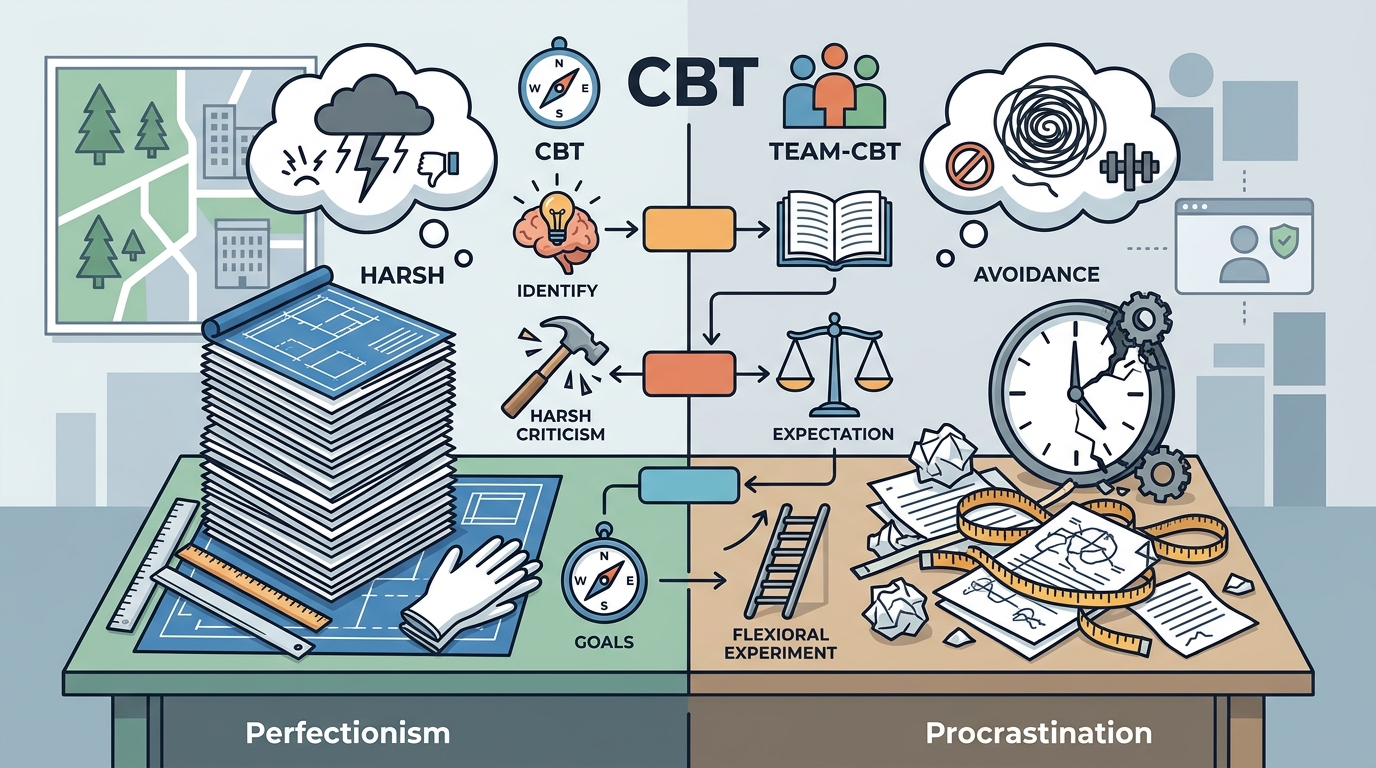
Identifying Cognitive Distortions
Perfectionists often rely on cognitive distortions such as all-or-nothing thinking, where anything less than perfect is considered a failure. Therapy involves identifying these patterns and challenging them with evidence. Clients learn to set realistic goals and accept that mistakes are a natural part of growth. This process reduces the anxiety associated with performance and allows for greater engagement in daily activities.
Behavioral Experiments
Behavioral experiments are a core component of CBT for perfectionism. Clients test their beliefs by intentionally doing things imperfectly and observing the outcomes. For example, a client might submit a report with minor errors to see if the feared catastrophic consequences occur. These experiments provide direct evidence that challenges the perfectionist mindset and builds resilience.
Therapy for Procrastination
Procrastination is the voluntary delay of intended action despite knowing that the delay will have negative consequences. It is often driven by emotional regulation issues, such as fear of failure or anxiety about the task itself. CBT addresses the underlying emotions and beliefs that fuel procrastination, rather than just focusing on time management techniques.
The Role of Avoidance
Procrastination is frequently a form of avoidance behavior. Clients avoid tasks because they anticipate negative emotions, such as boredom, frustration, or fear of judgment. Therapy helps clients understand this avoidance cycle and develop strategies to approach tasks despite the discomfort. By breaking tasks into smaller, manageable steps, clients can reduce the perceived threat and begin to take action.
Building Momentum
Building momentum is a key strategy in CBT for procrastination. Clients learn to start with small, low-stakes tasks to create a sense of accomplishment. This positive feedback loop helps counteract the inertia of procrastination. Additionally, therapists help clients develop self-compassion, reducing the shame that often accompanies missed deadlines and further delays.
Addressing Excessive Self-Criticism
Excessive self-criticism is a harsh internal dialogue that judges one's worth based on performance or perceived flaws. This pattern is closely linked to low self-esteem and can exacerbate anxiety and depression. CBT helps clients recognize the difference between constructive feedback and destructive self-criticism, fostering a more balanced and compassionate inner voice.
Reframing Negative Self-Talk
Reframing involves changing the way clients interpret their thoughts and experiences. Instead of viewing mistakes as evidence of personal failure, clients learn to see them as opportunities for learning. This shift in perspective reduces the emotional impact of self-criticism and promotes a healthier self-image. Therapists guide clients in developing a more objective and kind internal dialogue.
Developing Self-Compassion
Self-compassion is the practice of treating oneself with the same kindness and understanding that one would offer to a friend. CBT incorporates exercises to build self-compassion, such as mindfulness and self-acceptance. These practices help clients break the cycle of self-criticism and develop a more stable sense of self-worth. Over time, clients learn to respond to their own struggles with empathy rather than judgment.
Comparison of CBT Approaches
| Approach | Focus | Duration | Best For |
|---|---|---|---|
| Traditional CBT | Thoughts, feelings, behaviors | Short to medium term | Anxiety, depression, general distress |
| TEAM-CBT | Testing, Empathy, Agenda, Methods | Short term, rapid recovery | Perfectionism, procrastination, specific phobias |
| Exposure and Response Prevention (ERP) | Exposure to feared stimuli | Medium term | OCD, specific anxiety disorders |
Key Takeaways
- CBT is evidence-based: Cognitive Behavioral Therapy is a structured, goal-oriented approach that helps clients change unhelpful thinking patterns.
- Perfectionism involves cognitive distortions: All-or-nothing thinking and unrealistic standards are key targets in CBT for perfectionism.
- Procrastination is often avoidance: Therapy addresses the emotional drivers of delay, such as fear of failure, rather than just time management.
- Self-criticism can be reframed: Clients learn to replace harsh internal dialogue with self-compassion and objective feedback.
- Specialization matters: Choosing a therapist with specific experience in perfectionism and procrastination can improve treatment outcomes.
- Telehealth expands access: Clients in New Jersey and across 42 states can receive specialized CBT through secure online sessions.
Frequently Asked Questions
What is the difference between CBT and TEAM-CBT?
TEAM-CBT is a specific framework within CBT that emphasizes Testing, Empathy, Agenda-setting, and Methods. It is designed for rapid recovery and is often shorter in duration than traditional CBT. Both approaches are evidence-based, but TEAM-CBT places a strong emphasis on measurable progress and skill acquisition.
How long does CBT for perfectionism take?
The duration of CBT for perfectionism varies depending on the individual and the severity of the issue. With TEAM-CBT, the goal is to achieve tangible gains as quickly as possible. Some clients may see significant improvement in a few sessions, while others may require a longer course of treatment. A therapist will work with you to set realistic goals and timelines.
Can CBT help with procrastination?
Yes, CBT is effective for procrastination. It helps clients identify the emotional drivers of delay, such as fear of failure or anxiety. By addressing these underlying issues and developing practical strategies, clients can reduce procrastination and improve their ability to take action.
Is telehealth CBT as effective as in-person therapy?
Research suggests that telehealth CBT can be as effective as in-person therapy for many conditions. At NJ Cognitive Behavioral Therapy Counseling, secure online sessions are available for clients in 42 states, providing flexibility and convenience without compromising the quality of care.
How do I know if I have perfectionism?
Perfectionism is characterized by excessively high standards and overly critical self-evaluations. If you find that you are constantly striving for flawlessness, avoiding tasks for fear of not doing them perfectly, or feeling distressed by minor mistakes, you may benefit from therapy. A therapist can help you assess your patterns and determine if perfectionism is impacting your life.
What should I expect in my first session?
In your first session, you will complete intake forms and discuss your background and goals. The therapist will work with you to set up a treatment plan and establish a collaborative relationship. You can expect a confidential, judgment-free environment where you can explore your concerns and begin the process of change.
Does insurance cover CBT for perfectionism?
Insurance coverage for CBT varies by provider and plan. At NJ Cognitive Behavioral Therapy Counseling, you can check rates and insurance details to determine your coverage. It is important to verify your benefits before starting treatment to understand any out-of-pocket costs.
Conclusion
Finding the right therapist for perfectionism, procrastination, and self-criticism is a crucial step toward meaningful change. NJ Cognitive Behavioral Therapy Counseling in Teaneck, NJ, offers specialized, evidence-based treatment using TEAM-CBT to help clients achieve rapid and lasting improvements. Whether you are in Bergen County or accessing care via telehealth in one of 42 states, the practice provides a confidential, collaborative environment for growth. To begin your journey, schedule a complimentary 15-minute consultation to discuss your concerns and determine if the practice is the right fit for you.