
Exposure therapy helps people overcome panic attacks and anxiety by systematically reducing fear through controlled, repeated contact with feared situations. This evidence-based approach, often integrated into Cognitive Behavioral Therapy (CBT), allows the brain to learn that anticipated threats are not as dangerous as expected. At NJ Cognitive Behavioral Therapy Counseling, we utilize these techniques to help clients in Teaneck and across 42 states build lasting resilience against anxiety disorders.
The Mechanisms of Exposure
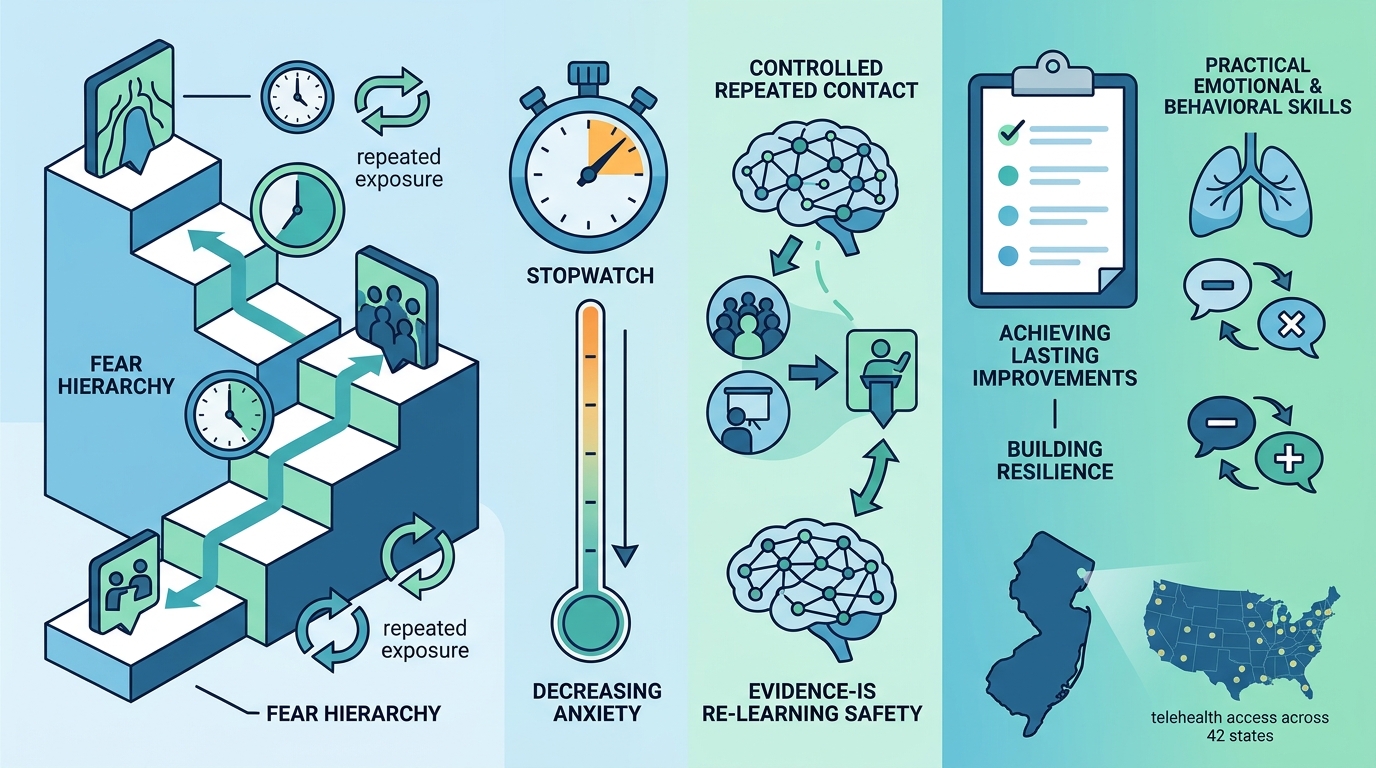
Exposure therapy is a structured treatment method where individuals face feared stimuli in a safe, controlled environment. The core principle is habituation, a process where the anxiety response naturally decreases with repeated exposure to the trigger. When a person avoids a situation, the brain reinforces the belief that the situation is dangerous. By confronting the fear, the brain updates its threat assessment, leading to a reduction in physiological arousal. For additional details, review the .
This process is not about enduring pain but about learning. As the individual remains in the situation without the expected catastrophe occurring, the fear response weakens. This is known as inhibitory learning. The brain forms a new memory that competes with the old fear memory. Over time, the new, safer memory becomes dominant. This shift is fundamental to long-term recovery from anxiety disorders.
Addressing Panic Attacks Specifically
Panic disorder is characterized by recurrent, unexpected panic attacks and persistent worry about future attacks. Exposure therapy for panic attacks often involves interoceptive exposure. This technique involves safely inducing physical sensations associated with panic, such as increased heart rate or dizziness. By experiencing these sensations in a controlled setting, clients learn that the physical symptoms of a panic attack are uncomfortable but not dangerous.
Many individuals with panic disorder avoid situations where they fear they might have an attack. This avoidance can severely limit daily life. Exposure therapy helps break this cycle by gradually reintroducing avoided situations. For example, a client might start by walking to a nearby store and then progress to more complex social settings. This systematic approach ensures that the client builds confidence at their own pace. The goal is to reduce the fear of fear itself, which is often the primary driver of panic disorder.
Types of Exposure Techniques
Measurement-Based Care and Progress
At NJ Cognitive Behavioral Therapy Counseling, we incorporate measurement-based care into our exposure therapy protocols. This involves using standardized assessments to track progress objectively. Clients complete brief questionnaires before and after sessions to measure their anxiety levels. This data helps the therapist and client see tangible improvements over time. It also allows for adjustments to the treatment plan if progress is slower than expected.
This data-driven approach ensures that therapy is results-focused. It moves beyond subjective feelings of improvement to provide concrete evidence of change. Clients often find this accountability motivating. It reinforces the idea that recovery is possible and measurable. By combining exposure techniques with regular progress monitoring, we can ensure that the treatment is effective and tailored to the individual's specific needs.
Key Takeaways
- Exposure therapy reduces anxiety by allowing the brain to learn that feared situations are not dangerous.
- Habituation and inhibitory learning are the primary mechanisms behind the effectiveness of exposure.
- Interoceptive exposure is a key technique for treating panic disorder by desensitizing clients to physical symptoms.
- Systematic, gradual exposure ensures that clients are not overwhelmed and can build confidence.
- Measurement-based care provides objective data to track progress and adjust treatment plans.
- Exposure therapy is a core component of CBT and is supported by extensive research.
- Working with a licensed professional ensures that exposure is conducted safely and effectively.
Frequently Asked Questions
Is exposure therapy safe?
Yes, exposure therapy is safe when conducted by a trained professional. The process is gradual and controlled, ensuring that the client is not overwhelmed. Therapists monitor the client's distress levels and adjust the intensity of the exposure as needed. The goal is to reduce anxiety, not to cause harm.
How long does exposure therapy take?
The duration of exposure therapy varies depending on the individual and the specific anxiety disorder. Some clients may see significant improvement in a few sessions, while others may require longer-term treatment. The use of measurement-based care helps to track progress and determine when the treatment goals have been met.
Can exposure therapy be done online?
Yes, exposure therapy can be effectively delivered through telehealth. Many techniques, such as imaginal exposure and interoceptive exposure, can be conducted via video call. NJ Cognitive Behavioral Therapy Counseling offers secure online services for clients in 42 states, making specialized care accessible to a wider audience.
What is the difference between exposure and flooding?
Exposure therapy is gradual and systematic, while flooding involves immediate, intense exposure to the most feared stimulus. Flooding is less commonly used and can be more distressing. Gradual exposure is generally preferred because it is more tolerable and has a higher success rate for most clients.
Does exposure therapy work for all types of anxiety?
Exposure therapy is effective for many anxiety disorders, including panic disorder, social anxiety, specific phobias, and post-traumatic stress disorder. However, the specific techniques used may vary depending on the diagnosis. A licensed psychologist can determine the most appropriate exposure protocol for your specific needs.
How does NJ Cognitive Behavioral Therapy Counseling approach exposure?
We use a measurement-based approach to exposure therapy, combining it with other evidence-based techniques like TEAM-CBT. This ensures that the treatment is tailored to your specific goals and that progress is objectively tracked. Our practice is based in Teaneck, NJ, and serves clients locally and via telehealth.
Start Your Journey to Relief
If you are struggling with panic attacks or anxiety, you do not have to face it alone. NJ Cognitive Behavioral Therapy Counseling offers specialized, evidence-based treatment designed to help you overcome fear and regain control of your life. Our practice is located in Teaneck, NJ, and we provide secure telehealth services to clients across 42 states. We invite you to schedule a free consultation to discuss your concerns and determine if our approach is the right fit for you. Learn more: About NJ Cognitive Behavioral.