
What Does Research Say About TEAM-CBT Outcomes for Anxiety?
Research indicates that TEAM-CBT is a highly effective, measurement-based framework for treating anxiety. Developed by Dr. David Burns, this approach integrates testing, empathy, agenda-setting, and methods to accelerate progress. Clients often experience significant symptom reduction within a few sessions, making it a robust alternative to traditional, open-ended talk therapy for those seeking structured, rapid relief from anxiety disorders. according to Journal of Medical
The TEAM-CBT Framework
TEAM-CBT is a structured approach to cognitive behavioral therapy designed to make treatment more efficient and effective. The acronym stands for Testing, Empathy, Agenda-Setting, and Methods. This framework ensures that therapy is not just a conversation, but a collaborative process with clear goals and measurable progress. By focusing on these four pillars, therapists can tailor interventions to the specific needs of each client.
Testing and Measurement
Testing involves using standardized scales to measure symptoms before and after each session. This objective data helps both the therapist and the client see exactly how much progress is being made. It transforms therapy from a subjective experience into a data-driven process, allowing for precise adjustments to the treatment plan. For additional details, review the .
Empathy and Alliance
Empathy is the foundation of the therapeutic relationship. A strong alliance ensures that the client feels understood and supported, which is critical for engaging in difficult therapeutic work. This connection helps build the trust necessary for clients to try new behaviors and challenge their thoughts. For additional details, review the Customer Experience.
Agenda-Setting and Methods
Agenda-Setting ensures that every session has a clear purpose and direction. Methods refer to the specific evidence-based techniques used to address the client's issues. By combining a clear agenda with proven methods, TEAM-CBT maximizes the utility of each therapy hour.
Evidence of Effectiveness
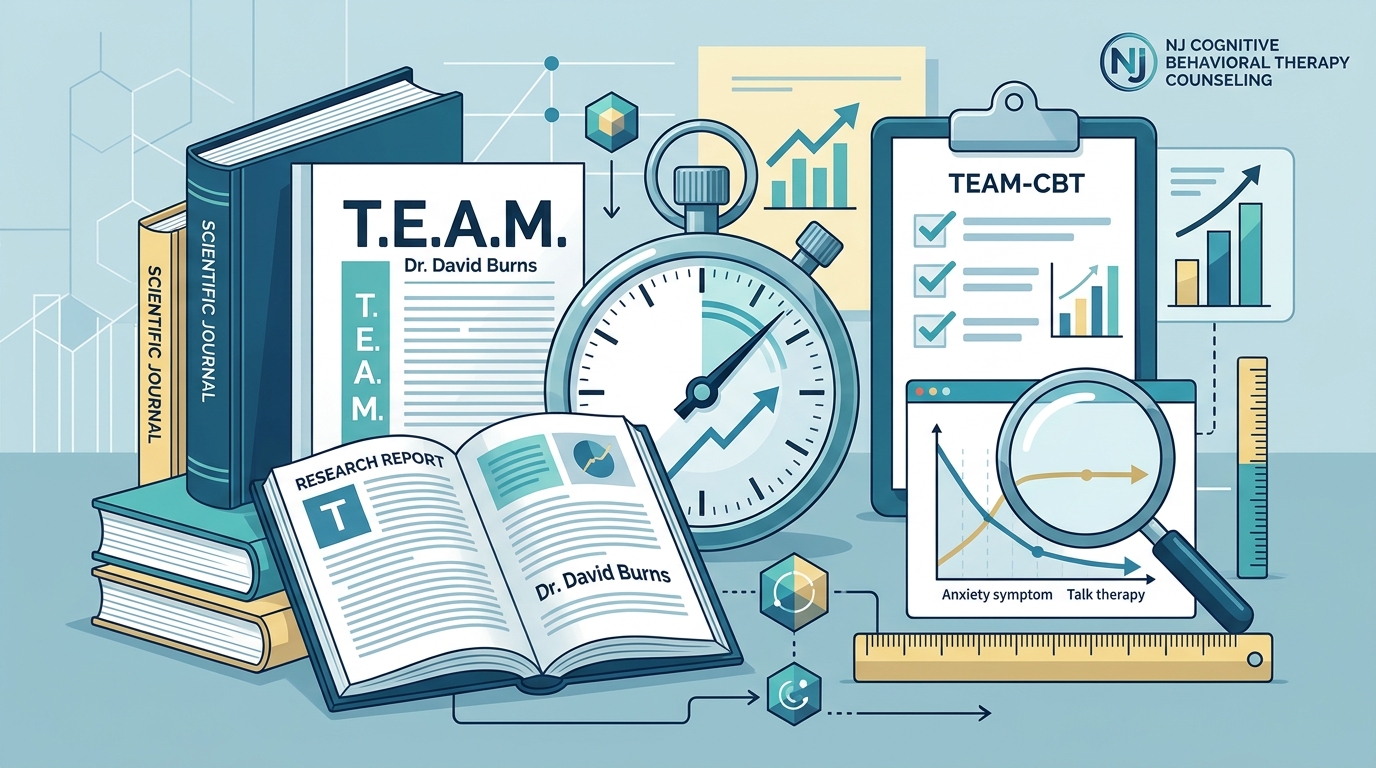
Studies have shown that TEAM-CBT can be significantly more effective than traditional therapy approaches. Research suggests that clients using this framework may see a 30% average reduction in suffering per therapy hour. This high rate of improvement means that clients often achieve meaningful results in fewer sessions than with other modalities. For individuals with anxiety, this efficiency can be a game-changer.
The effectiveness of TEAM-CBT is rooted in its measurement-based care model. By continuously tracking progress, therapists can identify which techniques are working and which are not. This allows for a dynamic and responsive treatment plan that adapts to the client's evolving needs. The result is a therapy experience that is both personalized and highly efficient.
Anxiety-Specific Outcomes
Research on cognitive behavioral therapy for anxiety has consistently shown positive outcomes. TEAM-CBT builds on this foundation by adding a layer of measurement and structure. This ensures that the client is not just learning about their anxiety, but actively working to change it. The focus on practical skills and behavioral experiments helps clients build confidence and reduce their reliance on safety behaviors. according to Journal of Medical
The Role of Measurement
Measurement-based care is a defining feature of TEAM-CBT. It involves using standardized scales to track symptoms over time. This data provides an objective view of progress, which can be highly motivating for clients. Seeing a graph of their improvement can reinforce the value of the work they are doing and encourage them to continue.
For therapists, measurement data helps to fine-tune the treatment plan. If a particular technique is not yielding results, the therapist can switch to a different method. This iterative process ensures that the client is always receiving the most effective intervention for their current needs. It also helps to prevent stagnation, which can be a common issue in traditional therapy.
Key Takeaways
- TEAM-CBT is a measurement-based framework that enhances the effectiveness of traditional CBT.
- The acronym stands for Testing, Empathy, Agenda-Setting, and Methods.
- Research suggests that TEAM-CBT can lead to a 30% average reduction in suffering per session.
- It is particularly effective for anxiety disorders due to its focus on exposure and cognitive restructuring.
- Measurement-based care allows for precise tracking of progress and dynamic treatment adjustments.
- Clients often experience meaningful improvement within the first few sessions.
Frequently Asked Questions
What is TEAM-CBT?
TEAM-CBT is a structured form of cognitive behavioral therapy that uses testing, empathy, agenda-setting, and methods to improve treatment outcomes.
How is TEAM-CBT different from traditional therapy?
Traditional therapy often lacks a clear structure and measurement of progress. TEAM-CBT adds a layer of data-driven care, ensuring that each session has a clear goal and that progress is objectively tracked.
Is TEAM-CBT effective for anxiety?
Yes, research indicates that TEAM-CBT is highly effective for treating anxiety disorders. Its focus on exposure and cognitive restructuring helps clients overcome avoidance and change unhelpful thinking patterns. according to Research Priorities to
How quickly can I see results with TEAM-CBT?
Many clients experience meaningful improvement within the first few sessions. The measurement-based approach allows for rapid adjustments to the treatment plan, which can accelerate progress.
Who developed TEAM-CBT?
TEAM-CBT was developed by Dr. David Burns, a Stanford psychiatrist and pioneer of cognitive behavioral therapy.
Next Steps
If you are struggling with anxiety and are looking for a structured, evidence-based approach to treatment, TEAM-CBT may be a good fit for you. At NJ Cognitive Behavioral Therapy Counseling, we use this framework to help clients achieve meaningful and lasting improvements in their lives. We offer a complimentary 15-minute initial consultation to help you determine if our practice is the right fit for your needs. To get started, schedule a consult today. Learn more: What is TEAM CBT.