
5 Key Steps Psychologists Take to Provide Legal Telehealth Services Across States
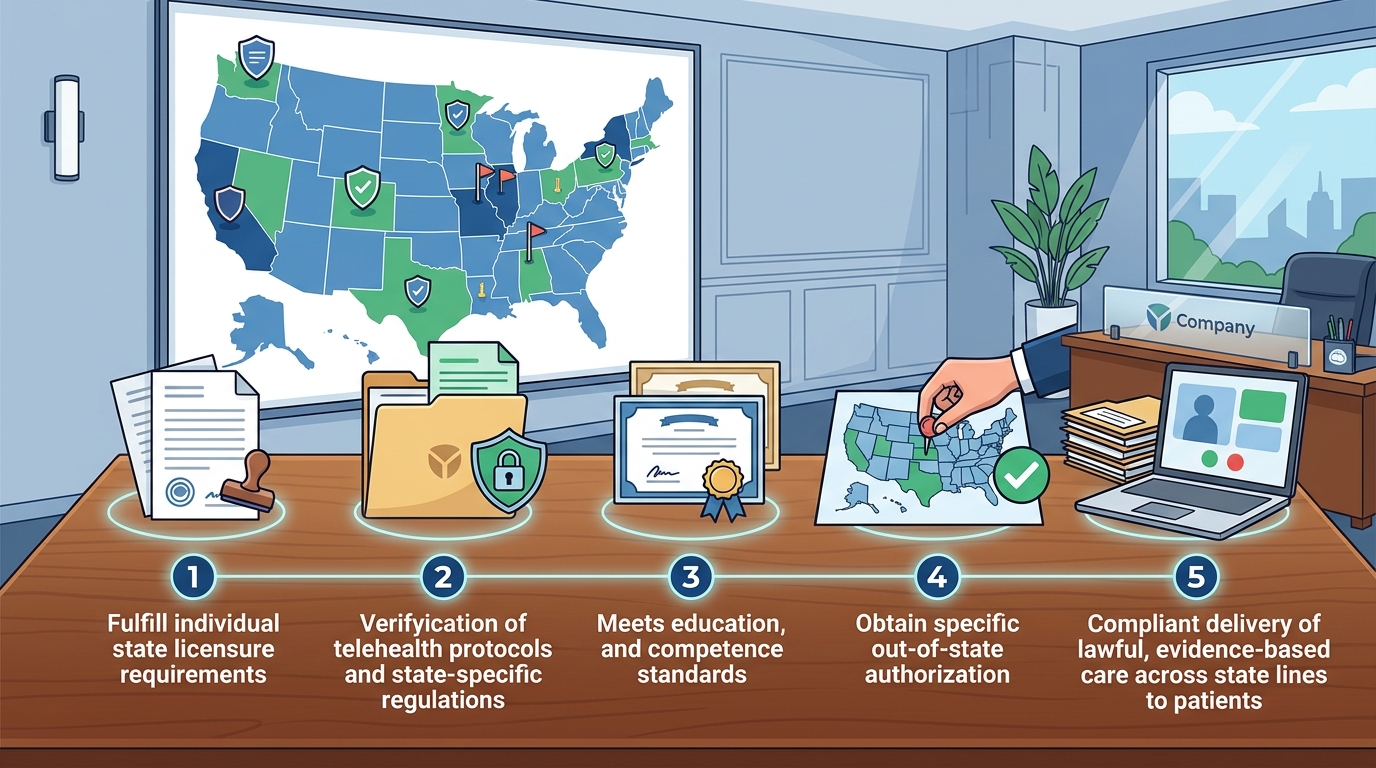
Providing psychological services across state lines requires strict adherence to varying licensing and regulatory frameworks. Psychologists must navigate complex legal requirements to ensure their practice remains compliant and ethical. This guide outlines the essential steps professionals take to deliver secure and lawful telehealth care to clients in different jurisdictions. For additional details, review the Contact Me NJ Cognitive.
1. Verify Primary State Licensure and Scope of Practice
Foundational compliance begins with maintaining an active license in the home state. A psychologist must hold a valid license in their primary state of practice before considering cross-border telehealth. This initial license establishes the baseline for their professional identity and legal authority. The scope of practice defined in this home state often dictates what services can be legally offered to out-of-state clients.
2. Assess Reciprocity and Compact Membership
Joining a licensing compact like Psypact simplifies cross-state authorization. The Psychology Interstate Compact, known as Psypact, allows licensed psychologists to practice in multiple member states with a single license. As of 2026, this compact significantly reduces the administrative burden of obtaining individual licenses in each state. Professionals must verify if their home state is a member and if the client's state participates in the compact.
3. Obtain Temporary or Endorsement Licenses
Non-compact states require specific temporary or full licenses for legal practice. When a client resides in a state that is not part of Psypact, the psychologist must secure a temporary license or a full endorsement in that jurisdiction. This process involves submitting applications, paying fees, and meeting specific educational or experience requirements set by the state board. These licenses ensure that the provider meets the local standards for professional conduct and competency.
4. Implement Secure Telehealth Technology and Privacy Protocols
5. Monitor Ongoing Regulatory Changes and Ethics
Continuous education is required to stay current with evolving telehealth laws. State regulations regarding telehealth are frequently updated, particularly in response to public health emergencies or new technological advancements. Psychologists must engage in ongoing professional development to understand changes in consent requirements, record-keeping, and emergency protocols. Staying informed ensures that the provider can adapt their practice to remain legally compliant and ethically sound.
Choosing the Right Path for Cross-State Practice
When deciding how to expand telehealth services, psychologists should first check if their home state and the client's state are Psypact members. If both are members, the compact license is the most efficient route. If not, the provider must evaluate the feasibility of obtaining temporary licenses in the specific states where they have clients. This strategic approach minimizes administrative overhead while maximizing legal compliance.
Frequently Asked Questions
What is Psypact and how does it help psychologists?
Psypact is a licensing compact that allows psychologists to practice in multiple states with a single license. It streamlines the process of providing telehealth services across state lines by reducing the need for individual state licenses.
Do I need a license in every state where I have clients?
You generally need authorization in the state where the client is physically located during the session. This can be achieved through a Psypact license, a temporary license, or a full endorsement, depending on the state's regulations.
What are the privacy requirements for telehealth?
Telehealth sessions must comply with HIPAA and state privacy laws. This requires using secure, encrypted platforms and obtaining informed consent from clients regarding the risks and benefits of digital communication.
How often do telehealth regulations change?
Regulations can change frequently, especially in response to public health events or new legislation. Psychologists must stay updated through continuing education and monitoring state board announcements.
Can I provide telehealth to clients in non-compact states?
Yes, but you must obtain a temporary or full license in that specific state. The requirements vary by state, so it is essential to review the local board's rules before offering services.
At NJ Cognitive Behavioral Therapy Counseling, we prioritize legal compliance and ethical practice in all our telehealth services. Our team ensures that every client receives secure, high-quality care that meets the highest professional standards. If you are seeking evidence-based therapy, we are here to support your mental health journey with integrity and expertise.