

Panic disorder is a condition characterized by recurrent, unexpected panic attacks and persistent worry about future episodes. Exposure therapy is a structured, evidence-based intervention that helps individuals confront feared sensations and situations in a safe, controlled manner. At NJ Cognitive Behavioral Therapy Counseling, we utilize these techniques to help clients in Teaneck and across 42 states reduce avoidance and regain control over their lives.
1. Interoceptive Exposure
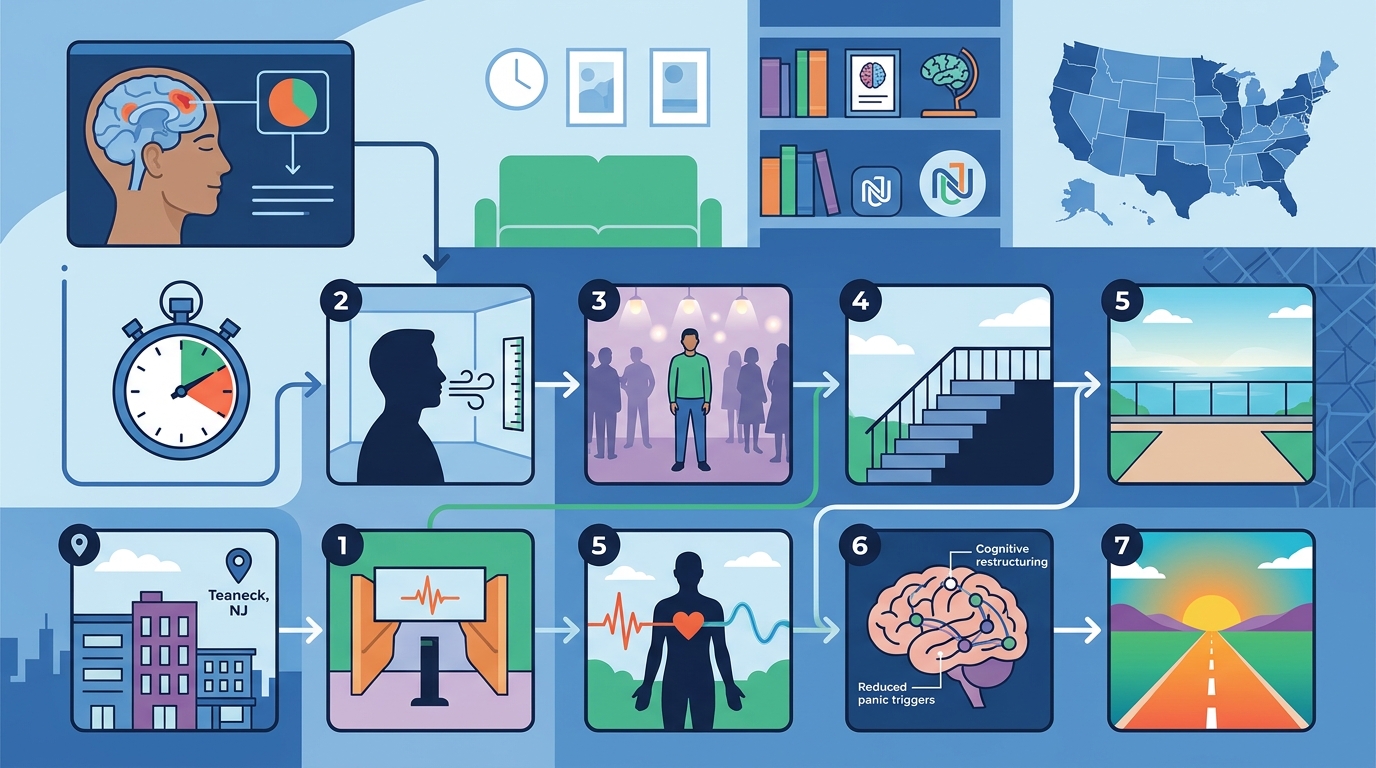
Interoceptive exposure involves deliberately inducing physical sensations associated with panic to reduce fear of bodily cues. Clients practice safe activities that mimic panic symptoms, such as rapid breathing or spinning in a chair. This technique helps the brain learn that these physical sensations are uncomfortable but not dangerous. For additional details, review the .
2. In Vivo Exposure
In vivo exposure requires facing real-world situations that trigger panic or avoidance. For example, a client might visit a crowded grocery store or ride in an elevator. By staying in the situation until anxiety naturally decreases, the client learns that the feared catastrophe does not occur. For additional details, review the Customer Experience.
3. Imaginal Exposure
4. Graded Exposure Hierarchy
A graded exposure hierarchy breaks down feared situations into manageable steps. Clients and therapists create a list of anxiety-provoking scenarios, ranked from least to most distressing. Starting with the easiest step builds confidence and momentum for tackling more challenging exposures. For additional details, review the Frequently Asked Questions.
5. Response Prevention
Response prevention involves withholding safety behaviors that temporarily reduce anxiety. Clients learn to resist checking their pulse, seeking reassurance, or leaving a situation early. This prevents the reinforcement of avoidance patterns and promotes long-term habituation.
6. Cognitive Restructuring
7. Virtual Reality Exposure
Virtual reality exposure provides a controlled, immersive environment for practicing coping skills. This technology allows clients to simulate complex scenarios, such as public speaking or travel, in a safe setting. It is particularly useful for clients who struggle with real-world access to certain triggers.
Choosing the Right Technique
The most effective approach depends on the individual's specific fears and comfort level. A licensed clinical psychologist can assess your unique needs and tailor a combination of these techniques to your treatment plan. At NJ Cognitive Behavioral Therapy Counseling, we use measurement-based care to monitor progress and adjust strategies as needed.
Frequently Asked Questions
How long does exposure therapy take for panic disorder?
Most clients see significant improvement within 8 to 12 sessions. The timeline varies based on the severity of avoidance and the individual's pace of habituation.
Is exposure therapy safe?
Yes, when conducted by a trained professional. Therapists ensure that exposures are conducted in a safe, controlled environment and that clients have adequate coping skills before beginning.
Can I do exposure therapy on my own?
Does exposure therapy work for all types of anxiety?
Exposure therapy is most effective for panic disorder, phobias, and PTSD. For generalized anxiety disorder, cognitive techniques may play a larger role, though exposure can still be beneficial.
What if I feel worse during exposure?
It is normal to feel increased anxiety initially. The goal is to ride out the wave of discomfort until it naturally subsides. Therapists guide clients through this process to ensure it is manageable and productive.
Start Your Journey to Relief
If you are struggling with panic disorder, take the first step toward recovery. NJ Cognitive Behavioral Therapy Counseling offers specialized, evidence-based treatment for anxiety and panic in Teaneck, NJ, and via telehealth across 42 states. Schedule a free consultation to discuss your concerns and determine if our practice is the right fit for you. Learn more: Home NJ Cognitive Behavioral.